

A drop fade is not the same thing as a low fade, but most drop fades sit in the low‑fade zone, so in practice they often function like a low fade. A classic low fade follows a fairly straight, horizontal line around the head, staying roughly level from front to back. A drop fade is defined by the way the fade “drops” down as it goes behind the ear and curves along the natural shape of the head toward the nape, creating a more rounded, contoured look. You can have a low drop fade, a mid drop fade, or even a high drop fade—the “drop” describes the shape of the fade line, not how high it starts.
What Is a Low Fade?
A low fade is a fade where the shortest point starts low on the head—around the top of the ear and just above the neckline—and gradually blends into longer hair above. The fade transition line generally stays fairly level as it wraps around the head, parallel to the hairline.
Key points of a low fade:
- Fade starts low, near the ear and nape
- Transition band is narrow and subtle
- Fade line stays mostly horizontal around the head
- Great for professional, conservative, or “clean but not too bold” looks
If you ask for “just a low fade,” most barbers will give you this straight, level shape by default.
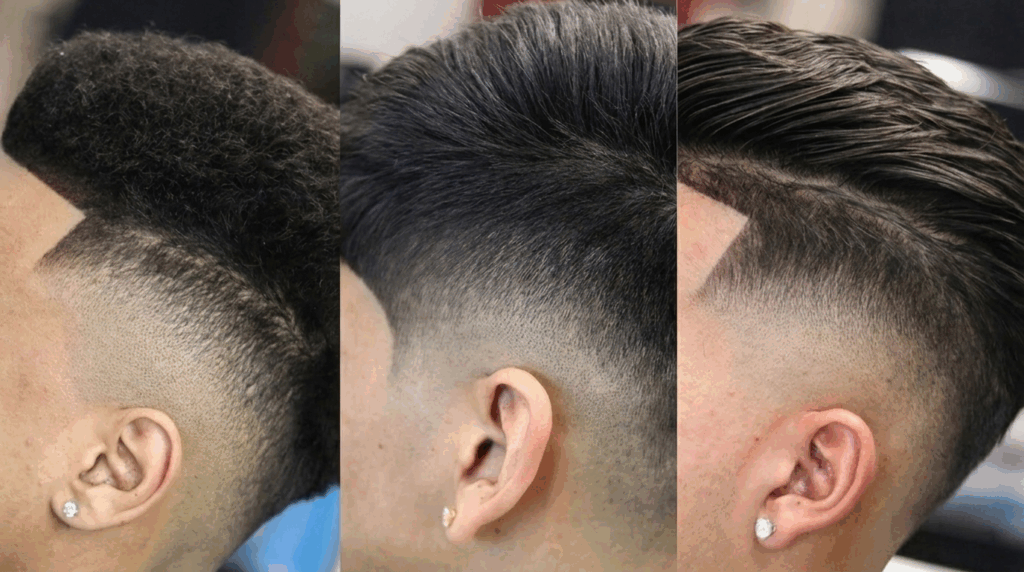
What Is a Drop Fade?
A drop fade is defined by the shape of the fade line rather than the height alone. Instead of staying level, the fade line dips down (“drops”) as it passes behind the ear and follows the natural curve of the skull into the nape.
Key features of a drop fade:
- The fade “drops” lower at the back than at the temples
- The line creates a curved arc, not a straight band
- Often hides the “hook” or bump at the back of the head by following its shape
- Gives a more contoured, artistic look, especially in profile
Barber education resources explain that you can apply this dropped shape to any height: low, mid, or high. So “drop” is about the curve, not the starting level of the fade.
Low Fade vs Drop Fade: Side‑by‑Side
| Feature | Low Fade | Drop Fade |
|---|---|---|
| Main idea | Straight, level fade line low on the head | Fade line dips/curves down behind the ear |
| Height | Always low | Can be low, mid, or high |
| Shape around the head | Mostly horizontal | Follows head’s natural curve |
| Look from the side | Clean, simple | More sculpted and dynamic |
| Best for | Simple, classic, professional styles | People who want more contour and shape |
So:
- A low fade can be straight or dropped (if you ask for it).
- A drop fade can be low, mid, or high—“drop” just describes the curve.
When Does a Drop Fade Act Like a Low Fade?
Most barbers and clients use “drop fade” to mean a low drop fade by default: the fade starts low at the temples and then dips even lower as it wraps around the back of the head. In this common version:
- The height is low
- The shape is dropped
So in everyday conversation, people often treat “drop fade” and “low fade” as similar, but technically the drop fade is just a specific, curved way of doing that low fade.
Which One Should You Get?
A straight low fade is best if you want:
- A simple, clean, easy‑to‑maintain look
- Something very safe for work or conservative settings
- A fade that doesn’t draw too much attention to itself
A drop fade is better if you want:
- A more “custom” or sculpted silhouette in profile
- To follow the natural curve of your head and hide bumps or hooks
- A slightly more modern, barbershop‑style finish that stands out a bit more
If you’re not sure which suits your head shape, a good barber can look at your profile and tell you whether a straight low fade or a dropped shape will be more flattering. Our article on how to choose a good barber can help you find someone who understands these nuances.
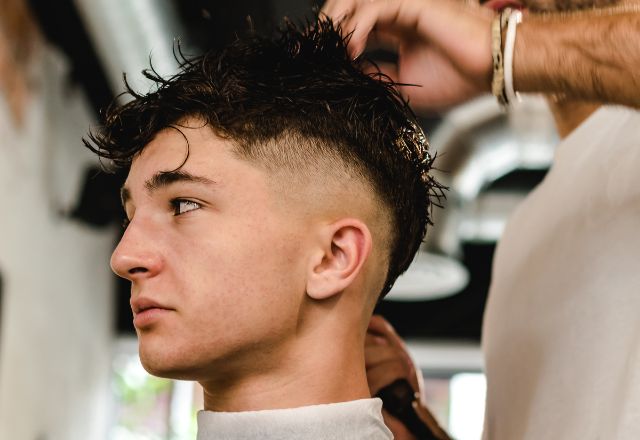
How to Ask Your Barber Clearly
To avoid confusion in the chair, be specific:
- If you want a classic low fade:
“Can I get a low fade that stays pretty straight around the head, not dropping too much at the back?” - If you want a low drop fade:
“I’d like a low drop fade—start the fade low at the temples, but let it drop and follow the curve behind the ear into the nape.”
Bring a side‑profile photo of each version if you can. Barbers rely heavily on visuals, and a single photo usually explains more than any terminology debate. For more language you can use in the shop, see our guide on how to ask for a haircut.
Maintenance Considerations
Both low fades and low drop fades usually need refreshing every 2–3 weeks if you like them looking sharp, especially if there’s skin or very short guards at the bottom. A drop fade may show regrowth a little differently because of its curved shape, but the schedule is essentially the same. If you do basic cleanup at home between visits (edges, neckline, a bit of bulk at the bottom), you can sometimes push a professional refresh to 3–4 weeks; our article on how to maintain a men’s fade hairstyle at home (on your site) is a good companion topic to link internally.
If you describe your head shape and the kind of environment you work in (very corporate vs casual), a more tailored recommendation can be given on whether a straight low fade, a low drop fade, or even a mid fade would fit you best.