

Trimming a beard with scissors requires patience, precision, and sharp tools, starting with clean, dry hair combed against the grain to identify uneven spots. To Scissor Trim Use sharp facial hair scissors to trim conservatively in the direction of hair growth, starting with the longest hairs first and using a comb as a guide to maintain symmetry. Cut in stages rather than attempting dramatic changes, regularly checking both sides in the mirror to ensure balance. With proper technique and the right tools, you can maintain a well-groomed beard at home between professional trims.
Why Home Beard Trimming Matters
Regular beard trimming maintains shape, removes split ends, prevents scraggly growth, and keeps your beard looking intentional and well-groomed. While professional barbers offer expertise, learning to trim your own beard between appointments saves money and gives you control over your appearance. According to Beardbrand’s beard trimming guide, home trimming becomes easier with practice, and most men can maintain basic shape with scissors once they understand proper technique.
However, dramatic reshaping or initial style cuts are best left to professionals. Home trimming works best for maintaining an existing style and removing stragglers between professional visits.
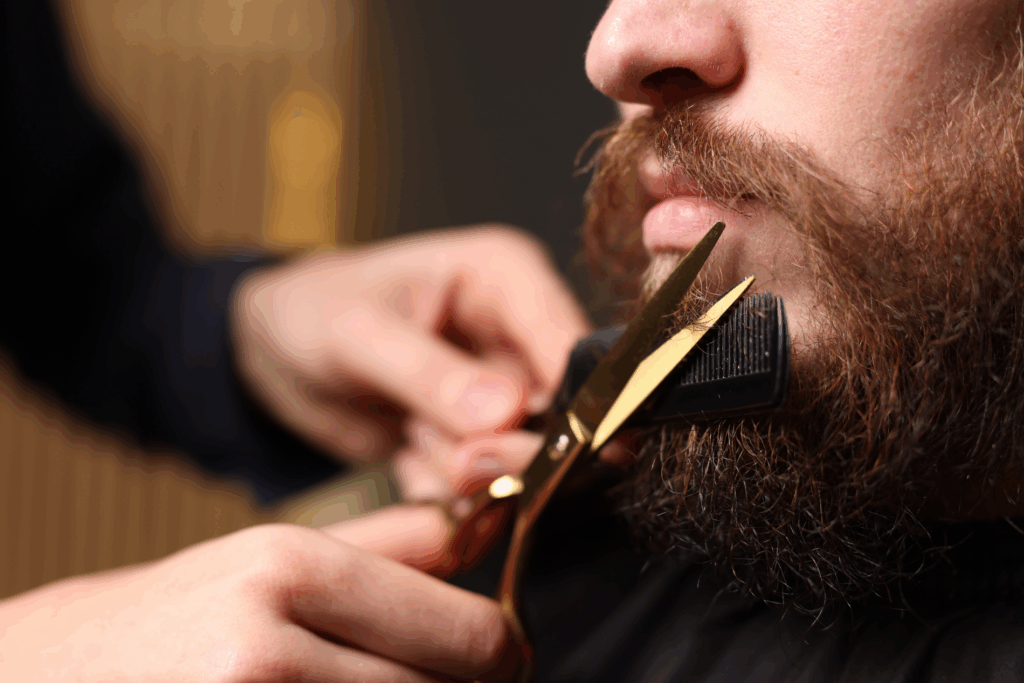
Essential Tools for Beard Scissor Trimming
Using the right tools makes trimming significantly easier and produces better results.
Required Tools:
- Facial Hair Scissors: Invest in sharp, high-quality beard scissors specifically designed for facial hair. Dull scissors crush hair rather than cutting cleanly, causing split ends and frustration. Look for scissors with straight blades, a comfortable grip, and a blade length of 4 to 5 inches.
- Fine-Tooth Comb: A beard comb or fine-tooth grooming comb helps section hair and serves as a cutting guide. The comb’s teeth should be close enough to control individual hairs.
- Mirror: A quality bathroom mirror is essential for seeing your work clearly. Consider a magnifying mirror for better visibility of detail work.
- Towel: Keep a towel handy to catch trimmings and wipe scissors.
Never use kitchen scissors or general-purpose scissors—they’re too dull for clean cuts and will damage beard hair. Quality beard scissors cost $15 to $50 but last years with proper care.
Preparation: The Foundation of a Good Trim
Proper preparation determines trim success more than technique alone.
Preparation Steps:
- Wash your beard: Use a sulfate-free beard shampoo to clean away dirt, oils, and product residue. This allows you to see the true texture and length.
- Condition thoroughly: Apply beard conditioner and leave it on for 2-3 minutes. Well-conditioned beard hair is easier to work with and cuts more cleanly.
- Dry completely: Blow-dry or air-dry your beard completely. Wet hair appears longer than it actually is—trimming wet beard risks over-cutting. Dry hair shows true length and growth patterns.
- Comb through: Use your beard comb to remove all tangles, working from the tips up toward the roots to avoid breaking hair.
- Let it settle: After combing, allow your beard to settle for a few minutes so it rests naturally before trimming.
Never trim a wet or damp beard. Water makes hair appear longer, and you’ll inevitably cut more than intended. Dry trimming allows precise control and reveals your beard’s true length.
Step 1: Establish the Bottom Length
Begin by trimming the bottom of your beard to establish overall length. This sets the foundation for all subsequent trimming.
Bottom Length Technique:
- Comb downward: Use your comb to pull all beard hair downward, revealing the natural bottom line.
- Identify the longest hairs: These are the hairs that will determine your beard’s bottom length.
- Position scissors: Hold scissors parallel to the floor (horizontal) for an even baseline.
- Trim conservatively: Cut only the very bottom 1/8 to 1/4 inch. You can always trim more; you cannot add hair back.
- Follow your jawline: Your beard’s bottom should roughly follow your jawline, though personal preference varies.
Start with minimal trimming. Most beard trimming mistakes involve cutting too much too quickly. Trim in stages, checking your progress frequently in the mirror.
Step 2: Shape the Sides With Rounded Edges
Shaping the sides creates a flattering profile and removes straggly growth.
Side Shaping Technique:
- Comb cheek hair downward: Pull hair on your cheeks straight down to see the natural fall pattern.
- Identify stray hairs: Look for hairs extending beyond the main body of your beard.
- Trim strategically: Remove strays and hairs that stick out, working in small sections.
- Use rounded cuts: Instead of cutting straight across, use angled, rounded cuts that follow the natural contour of your face. This creates a natural-looking shape rather than an artificial line.
- Check symmetry: Look in the mirror frequently, comparing left and right sides to ensure balance.
For detailed guidance on beard shaping and styling, explore our Men’s Grooming Tips article for professional recommendations.
Step 3: Trim the Neckline and Under-Chin Area
The neckline and under-chin area are critical for a polished appearance.
Neckline Trimming:
- Locate your Adam’s apple: Find the center of your neck at your Adam’s apple.
- Trim approximately one inch above: Your beard should generally end about an inch above your Adam’s apple. This proportion flatters most face shapes.
- Cut upward: Hold scissors vertically and cut upward toward your beard, creating texture and preventing a blunt, unnatural line.
- Create a taper: Rather than a straight line, create a gradual taper from the sides toward the center, following your neck’s natural contours.
- Blend into cheek area: Ensure the neckline blends smoothly into your cheek hair, with no obvious demarcation line.
A well-trimmed neckline dramatically improves your beard’s overall appearance and prevents the unkempt look of hair extending onto your neck.
Step 4: Groom and Shape the Mustache
The mustache requires special attention for both appearance and function.
Mustache Trimming:
- Comb mustache downward: Use your comb to pull all mustache hair straight down over your upper lip.
- Identify the lip line: See where your natural lip line is beneath the hair.
- Trim along the lip line: Carefully trim mustache hairs that extend below your lip, creating a clean line.
- Work in small sections: Trim from the center outward, taking very small amounts at a time.
- Check the other side: Ensure both sides of your mustache are even.
- Avoid over-trimming: The mustache should frame your lip without appearing sparse or over-manicured.
Many men find mustache trimming trickier than beard trimming because the area is more visible and mistakes are more obvious. Take your time and trim conservatively.
Step 5: Use the Comb Guide Method for Precision
The comb guide method provides structure and prevents uneven cutting.
Comb Guide Technique:
- Hold comb vertically: Position your fine-tooth comb against your beard, holding it vertically (perpendicular to your face).
- Pull hair outward: The comb holds beard hair in place while allowing longer strays to extend beyond the comb’s teeth.
- Trim protruding hairs: Using your scissors, carefully trim only the hair extending beyond the comb’s teeth.
- Move systematically: Work section by section across your cheeks, chin, and neck.
- Maintain comb angle: Keep the comb at a consistent angle to ensure even trimming across sections.
This method prevents accidentally cutting too much and maintains symmetry. It’s especially useful for beginners or when doing detailed trimming.
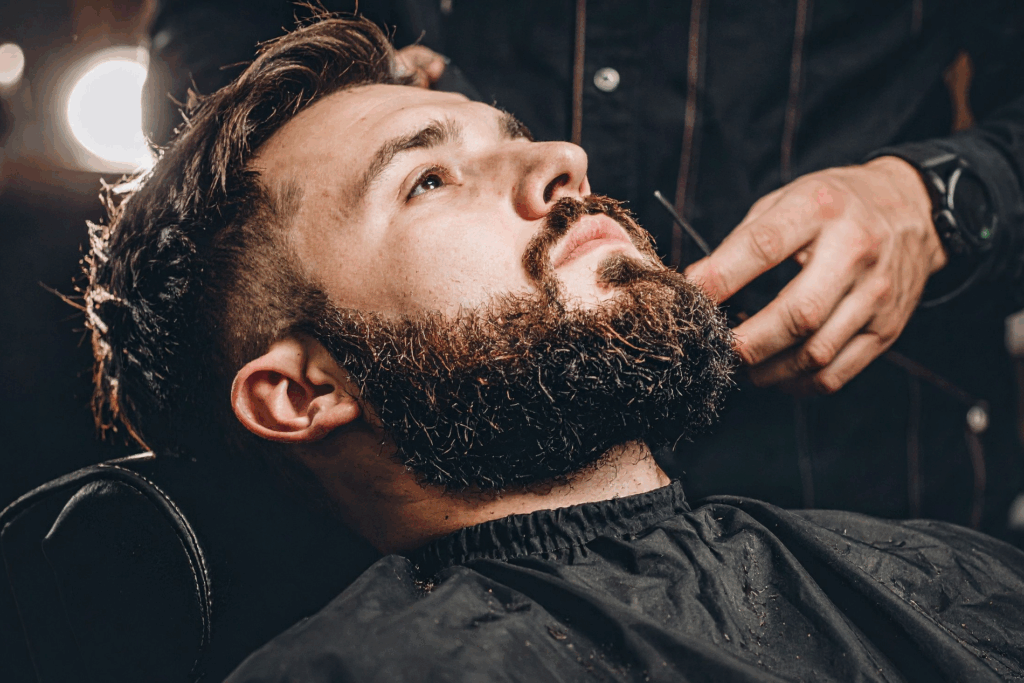
The “Less Is More” Philosophy
This cannot be overstated: trim conservatively in stages rather than attempting dramatic changes.
Why Conservative Trimming Matters:
- Hair doesn’t grow back instantly: Hair grows about 0.5 inches per month. If you cut too much, you’ll wait months for it to return.
- Mistakes compound: Each cutting error becomes more noticeable and harder to correct.
- Multiple sessions work better: Trim once, wait a few days, evaluate, then trim more if needed.
- Shapely beards require iteration: Professional barbers make multiple passes; you should too.
Plan to spend 20-30 minutes on your first trimming, making small cuts and frequently assessing progress in the mirror. Future trims become faster as you gain confidence.
Common Mistakes to Avoid
Learning from others’ errors prevents your own:
- Trimming wet hair: Wait until completely dry to see true length.
- Using dull scissors: Dull blades crush hair and cause split ends. Keep scissors sharp.
- Cutting too much: Conservative trimming beats aggressive cutting every time.
- Ignoring symmetry: Compare sides frequently to maintain balance.
- Cutting straight across: Use angled, rounded cuts for natural-looking shape.
- Neglecting the neckline: A clean neckline dramatically improves overall appearance.
- Rushing the process: Patience produces better results than speed.
Beard Scissor Trimming Schedule
Weekly: Remove stray flyaways and maintain shape (5 minutes)
Monthly: Full trim maintaining length and shape (15-20 minutes)
Every 6-8 weeks: Deeper trim with slight length reduction (20-30 minutes)
Between these: Spot-trim obvious stragglers as needed
This schedule maintains a well-groomed appearance without over-trimming. Adjust based on your beard growth rate and desired maintenance level.
When to Seek Professional Help
While home trimming maintains existing styles, certain situations warrant professional barber services:
- Initial beard shaping: Professional barbers create the initial style that you then maintain.
- Significant length reduction: Dramatic changes are better done by professionals.
- Complex beard designs: Lines, patterns, or artistic elements require professional skill.
- Beard shaping for face shape: Professionals assess face shape and recommend flattering proportions.
- Annual refresh: Even beard enthusiasts benefit from annual professional reshaping.
For professional beard care and expert trimming, book an appointment at Barbertainer’s booking platform to discuss your beard goals with experienced barbers. For additional beard maintenance guidance, see our Barbering Tools Guide.
Comparison: Home Trimming vs. Professional Trimming
| Aspect | Home Trimming | Professional Trimming |
|---|---|---|
| Cost | Low (one-time tool investment) | $20-60 per visit |
| Skill Required | Moderate | Expert |
| Best For | Maintenance between appointments | Initial shaping, major changes |
| Time Investment | 15-30 minutes | 30-60 minutes |
| Precision | Good with practice | Excellent |
| Safety Risk | Low if careful | Minimal |
| Frequency | Weekly to monthly | Every 6-8 weeks |
Tools and Product Recommendations
Invest in quality tools for better results:
- Scissors: Expect to spend $20-50 for quality beard scissors. Brands like Tweezerman and Kasho offer excellent options.
- Comb: A fine-tooth comb costs $10-20. Choose one with comfortable grip and closely-spaced teeth.
- Beard Oil: Post-trim conditioning with beard oil (see our Men’s Grooming Tips) reduces irritation and maintains softness.
According to grooming experts at GQ Magazine, investing in proper tools dramatically improves grooming outcomes and justifies the cost through years of reliable use.
Summary: Mastering Home Beard Trimming
Learning to trim your beard with scissors takes practice but is absolutely achievable. Start with clean, dry hair, use sharp scissors, trim conservatively in stages, and frequently check symmetry in the mirror. Maintain proper technique for neckline, sides, and mustache, and remember that less is always more when trimming. With these principles and consistent practice, you’ll maintain a well-groomed, intentional beard appearance between professional appointments.
Ready to take your beard grooming to the next level? Book a professional consultation at Barbertainer’s booking platform to learn advanced techniques and ensure your beard always looks its best.