

Not every barber can execute a high-quality fade, despite fades being a staple of modern grooming. While most contemporary barbers possess basic fade skills, fade quality varies dramatically—from smooth, seamless blends to harsh, poorly executed lines that ruin an otherwise good haircut. Fade execution requires specific technical skills, precision tools, artistic understanding of blending, and considerable practice to master. Before booking with any barber for a fade, research their portfolio, check reviews specifically mentioning fade quality, and verify they specialize in the fade type you want. The difference between a mediocre fade and an excellent one can transform your entire appearance.
Why Not All Barbers Excel at Fades
Fades have become ubiquitous in modern barbering, leading many to assume any licensed barber can execute them competently. This misconception leads to disappointing haircuts and wasted money. Understanding why fade quality varies helps you identify skilled fade specialists.
The Fade Learning Curve:
According to Barberpedia’s comprehensive guide on fade execution, fades are among the most technically challenging cuts in barbering. Unlike scissor-only cuts or simple clipper work, fades demand:
- Precise clipper control: Subtle pressure changes alter results dramatically. Too much pressure creates harsh lines; too little leaves uneven blending.
- Guard sequencing knowledge: Understanding how different guard combinations create seamless transitions requires experience and mathematical thinking about clipper mathematics.
- Three-dimensional visualization: Barbers must envision how the fade will look from multiple angles while only viewing one angle during cutting.
- Artistic blending ability: The difference between a noticeable but acceptable transition and a seamless, imperceptible blend separates good barbers from great ones.
- Speed and efficiency: Fades require multiple passes with different guards; slower barbers spend 45+ minutes on a fade while skilled specialists complete one in 15 minutes.
These skills develop through deliberate practice over months or years. A barber who learned primarily through apprenticeship with talented mentors develops fade mastery faster than one who learned basics through barber school and never specialized.
Barber Experience Levels and Fade Capability
Not all barbers possess equal fade expertise. Understanding experience tiers helps you identify which barbers can deliver your desired results.
Apprentice/New Barbers (0-2 years):
- Can execute basic fades with visible transitions
- May struggle with seamless blending or complex fade variations
- Often nervous, leading to overly cautious or inconsistent cutting
- Best for: Simple, forgiving fade styles; not ideal for first-time fades or specialized requests
Intermediate Barbers (2-5 years):
- Comfortable with standard fades (low, mid, high)
- Can blend reasonably well, though not always seamlessly
- Reliable consistency with basic styles
- Best for: Standard fades for clients with average expectations
Advanced/Specialist Barbers (5+ years, with fade focus):
- Execute seamless, artistically impressive fades
- Master multiple fade variations (skin, burst, drop, temple)
- Problem-solve unusual hair types or head shapes
- Consistently deliver high-quality results
- Best for: Complex fades, first-time clients wanting professional results, specialized requests
Scissor-focused Barbers:
- May have limited fade experience despite barber license
- Prefer scissor techniques over clipper work
- Can struggle with precision clipper blending
- Best for: Scissor cuts, shape-ups; not ideal for fades
For guidance on finding skilled barbers, explore our How to Choose a Good Barber article.
Fade Types and Required Expertise Levels
Different fade variations require different skill levels, and not all barbers master all types.
Basic/Standard Fades (Easier to Execute):
- Taper: Gradual length progression, most forgiving style
- Low Fade: Fade starts low, blends upward; relatively straightforward
- Temp Fade: Fades only at temples and sideburns; limited area means less complex
Most barbers with 2+ years experience can execute these adequately.
Intermediate Fades (Moderate Difficulty):
- Mid Fade: Fade starts at ear level; requires balanced blending across the entire side
- High Fade: Dramatic, starts high on the head; demands precise blending and artistic sense
- Burst Fade: Curved fade behind ear; requires 3D visualization and artistic skill
These require barbers with solid blending understanding and consistent practice.
Advanced Fades (Difficult, Requiring Specialization):
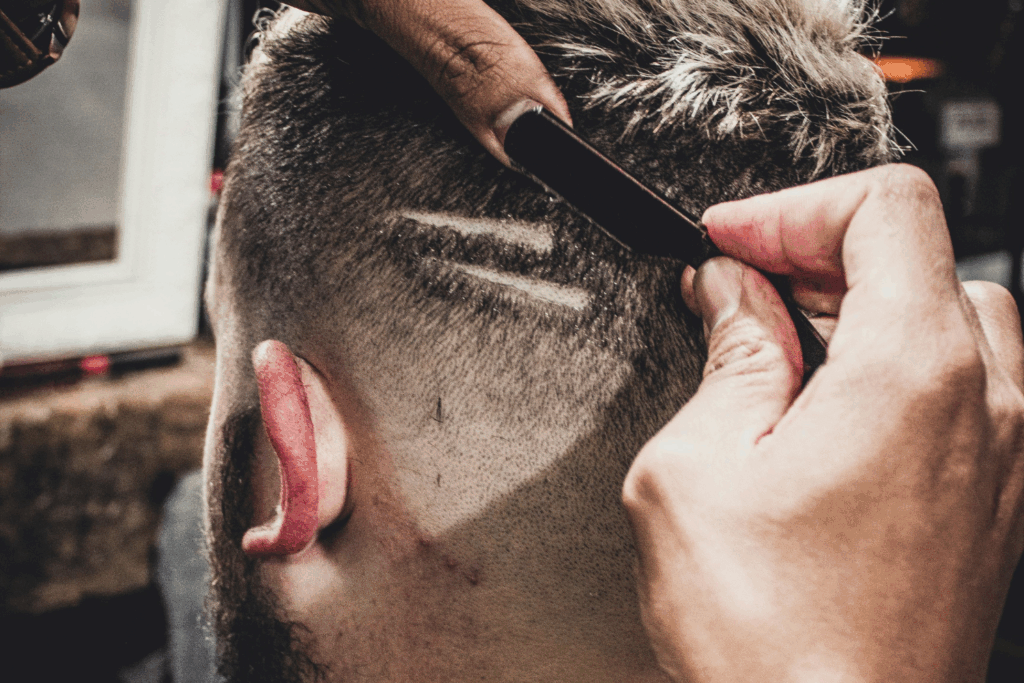
- Skin/Bald Fade: Cut to skin (guard #0) on sides, demanding straight razor work, precision, and perfect blending to avoid harsh lines
- Drop Fade: Curved fade that follows head shape; requires advanced 3D visualization
- Textured/Messy Fade: Appears easy but demands mastery to avoid looking simply bad
According to grooming experts at Art of Manliness, skin fades specifically separate exceptional barbers from competent ones. The visual harshness of a poorly executed skin fade is immediately obvious, making it the ultimate test of barber skill.
How to Identify Barbers Who Excel at Fades
Before booking, verify that your chosen barber has proven fade expertise.
Research Strategies:
1. Check Social Media and Portfolios:
- Look at their Instagram or website for fade examples
- Assess fade quality across multiple photos, not just their best work
- Look for consistency—do all fades show smooth blending or occasional harsh lines?
- Check for the specific fade type you want; if you don’t see your desired style, ask if they specialize in it
- Read photo captions for client testimonials or fade-specific praise
2. Ask Direct Questions:
- “How many fades do you cut per week?” (High volume suggests experience)
- “What’s your favorite fade to execute?” (Passion indicates specialization)
- “Can you show me examples of skin fades you’ve done?” (Specific request reveals portfolio depth)
- “How long have you been specializing in fades?” (Direct experience question)
- “What’s the most complex fade you’ve executed?” (Challenges attempted indicate skill level)
3. Read Online Reviews:
- Look specifically for fade-related comments on Google, Yelp, or barber review sites
- Positive reviews mentioning “perfect blend” or “seamless fade” indicate quality
- Negative reviews mentioning “harsh lines” or “uneven fade” suggest problems
- Note if multiple reviews praise or critique fade work
4. Observe Their Setup:
- Quality barbers invest in multiple clipper sets with various guards for precision
- Sharp tools are essential; dull clippers produce inconsistent results
- Organized workspace suggests professionalism and attention to detail
5. Ask for References:
- Request names of clients you can contact about their fade experience
- Or ask: “Can I call previous clients as references?” (Professional barbers say yes)
For detailed guidance on barber selection, see our How to Ask for a Haircut article for communication tips.
Generational Differences in Fade Expertise
Age and barber generation significantly influence fade specialization.
Younger Barbers (Under 35):
- Trained during the modern fade era when fades became staple
- Often learned fade techniques from the beginning of their training
- Natural comfort with trendy variations (skin fades, burst fades, textured fades)
- Often active on social media showcasing fade work
- Best for: Modern, trendy fade variations
Mid-Career Barbers (35-55):
- Trained when scissors were dominant and fades less common
- May have learned fades later in their career
- Often excel at classic fades and traditional cuts
- Possibly less experienced with newest variations
- Best for: Classic fades, traditional styles; variable with cutting-edge variations
Experienced Barbers (55+):
- Some specialize in traditional cuts and scissors; fades may not be their focus
- Others mastered fades and continue specializing in them
- Consistency and reliability typically excellent
- Possible resistance to newest fade trends
- Best for: Classic fades; research individual barber’s specialty
This isn’t a hard rule—some older barbers specialize in modern fades, and some younger barbers prefer scissor work. Individual specialization matters more than age, but age can indicate likely expertise areas.
The Cost of Poor Fade Execution
A mediocre fade from an inexperienced barber creates several problems:
- Visual impact: Harsh lines, uneven blending, or over-fading one side ruins the entire haircut aesthetic
- Time to fix: Correcting a bad fade often requires waiting 2-3 weeks for regrowth, then visiting a specialist barber
- Cost: Paying for a bad fade, then paying again for correction, wastes money
- Confidence: A bad fade visibly marks you as someone who received a poor haircut
- Styling difficulty: Poor blending makes the haircut nearly impossible to style well
Investing slightly more in a skilled fade specialist saves money and frustration compared to cheap fades requiring correction.
Comparison: Barber Specialization and Fade Quality
| Barber Type | Fade Skill | Best Fade Types | Speed | Consistency | Best For |
|---|---|---|---|---|---|
| Fade Specialist | Exceptional | All types, especially complex | Fast (15-20 min) | Excellent | High-quality fades, complex requests |
| General Barber | Good | Basic-intermediate | Moderate (20-30 min) | Good | Standard fades, regular clients |
| Scissor Specialist | Fair-Good | Basic tapers only | Slow (30-45 min) | Variable | Scissor cuts; avoid fades |
| New Barber | Basic | Simple tapers/low fades | Slow (30-40 min) | Inconsistent | Basic fades only |
| Apprentice | Limited | Very basic | Very slow (45+ min) | Poor | Not recommended |
Questions to Ask When Booking a Fade
Prepare these questions before scheduling:
- “Are you currently accepting new clients for fades?”
- “How many years have you specialized in fades?”
- “What’s your average wait time for fade appointments?”
- “Can I book with you specifically, or am I assigned a random barber?”
- “Do you offer consultations before the cut to discuss style?”
- “Have you executed [specific fade type] before?”
- “What’s your fade pricing?” (Specialty fades cost more than basic cuts)
- “Do you recommend any aftercare or styling products?”
Professional barbers answer these questions thoroughly and appreciate detailed inquiries. If a barber seems dismissive or vague, consider booking elsewhere.
Red Flags: Signs a Barber Shouldn’t Do Your Fade
Avoid booking with barbers displaying these warning signs:
- No portfolio or social media: Professional barbers showcase work
- Negative reviews mentioning fades: Multiple complaints suggest consistent problems
- Vague about experience: “I can do fades” without specifics suggests limited expertise
- Rushing appointments: Quality fades need 20-30 minutes; barbers rushing clients sacrifice quality
- No consultation offered: Professionals discuss style before cutting
- Dirty workspace: Cleanliness reflects professionalism and attention to detail
- Dull-looking tools: Sharp equipment is essential for precise fades
- Defensive about criticism: Professionals accept feedback; defensive barbers are problematic
Trust your instincts. If something feels off, book elsewhere.
Finding Your Ideal Fade Barber
The process of finding a skilled fade specialist takes time but pays dividends.
Search Strategy:
- Ask friends and coworkers for fade barber recommendations with specific praise for quality
- Search Instagram and Google for “barber near me” and review portfolios
- Check Google and Yelp reviews, filtering for fade-specific praise
- Narrow to 3-5 candidates with strong fade portfolios and reviews
- Call or message with the questions listed above
- Book with the barber showing greatest fade specialization and professionalism
- Commit to 2-3 appointments before deciding if they’re your ideal match
For finding quality barbers in your area, book at Barbertainer’s booking platform where skilled barbers specialize in precision fading and modern styles.
Once You Find a Great Fade Barber
Maintain the relationship:
- Book consistently: Regular appointments every 2-3 weeks keep your fade sharp
- Tip appropriately: 15-20% tips show appreciation for quality work
- Provide feedback: Good feedback helps your barber refine their craft for you
- Refer friends: Recommend your barber to others who appreciate quality fades
- Request your barber specifically: Always ask for the same barber by name
For comprehensive barber selection guidance and grooming expertise, explore our Barbering Tools Guide and Men’s Grooming Tips for complete knowledge.
Summary: Finding a Barber Who Can Execute Your Fade
Not every barber can deliver high-quality fades—it requires specific skills, experience, artistic sense, and practice to master. While most modern barbers possess basic fade ability, the quality spectrum ranges from mediocre to exceptional. Before booking, research the barber’s portfolio, read fade-specific reviews, ask direct questions about their experience, and verify they specialize in your desired fade type. Investing time in finding a skilled fade specialist ensures you receive the sharp, polished results that make fades so visually striking.
Ready to find a barber who specializes in exceptional fades? Book your appointment at Barbertainer’s booking platform to connect with experienced fade specialists who consistently deliver high-quality results.