

Popular men’s haircuts for fine hair are short, textured styles with tighter sides and a bit of controlled volume on top, so the hair looks thicker instead of flat or see‑through. The best choices are textured crops/French crops, textured quiffs, short crew cuts, and buzz cuts, often paired with a fade or taper and styled with matte products like clay, paste, or sea salt spray rather than shiny gel.
What Makes a Haircut Good for Fine Haircuts?
Fine hair isn’t necessarily “thinning” each strand is just smaller in diameter, so it shows scalp more easily and collapses faster. Good cuts for fine hair all do the same four things:
- Keep the length on top relatively short so it doesn’t go limp
- Add texture and layering instead of one heavy, flat block
- Keep the sides tighter (taper or fade) to make the top look fuller by contrast
- Use matte, lightweight products, not heavy, greasy ones that separate the hair
Modern barbering haircuts guides for fine hair emphasise loose layers, point‑cutting for texture, and matte styling to make the hair look thicker rather than trying to grow it long and straight.
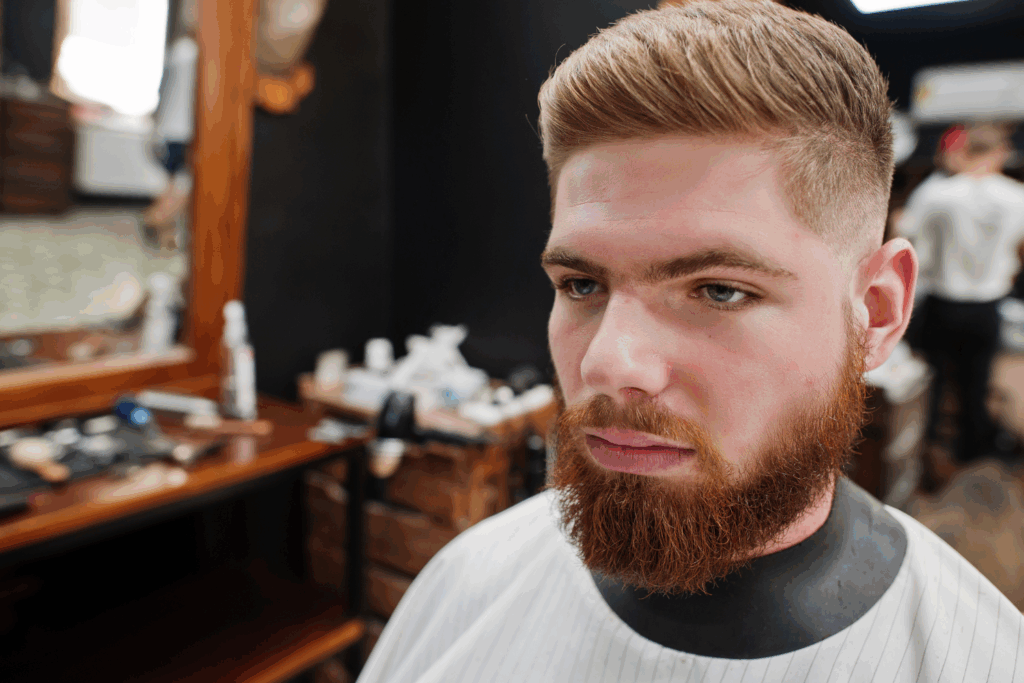
Best Haircuts for Fine Haircuts
Textured Crop / French Crop
The textured crop is one of the most flattering haircuts for fine hair because it uses short sides and a choppy, piecey top. The fringe can be blunt or lightly textured, which helps the front look denser and masks a thin hairline. A French crop is similar, but usually features a shorter fringe and slightly more polish. This style works especially well if you want a modern look that is easy to maintain. For styling advice and barber communication tips, see our guide on how to ask for a haircut.
Textured Quiff
If you like a bit more height and styling, the textured quiff is ideal. The sides are kept short, while the front/top is a little longer and blow‑dried up and back. Vertical volume at the front draws attention away from thinner areas and makes the whole top look fuller. A matte clay or paste keeps the quiff looking fuller instead of greasy. For more on products and day‑to‑day grooming, check our men’s grooming tips.
Crew Cut / Short Layered Cut
A crew cut or short layered scissor cut is perfect if you want neat and low‑maintenance. The sides are tapered or faded with a slightly longer, softly layered top that follows the head shape. Keeping everything relatively short reduces contrast between scalp and hair and stops fine hair from flopping or splitting into see‑through sections. This is ideal for office environments or anyone who wants a clean, masculine cut that still flatters finer hair.
Buzz Cut (and Faded Buzz)
When hair is very fine or starting to thin, shorter is usually better. A buzz cut keeps the hair very short all over—often with a #2 or #3 guard—or combines that length on top with a fade on the sides for more shape. Taking the hair very short removes the visual contrast between denser and weaker areas, so thinning patches stand out less and the overall look feels more even. This is a strong option if you’re tired of fighting thinner areas and want something simple that always looks intentional.
Slick Back with Undercut (Used Carefully)
A slick back with undercut can work on fine hair when there’s still enough density on top. Short or undercut sides create contrast, while the top is brushed or slicked back. This combination can help disguise mild thinning at the crown by drawing the eye to the front and overall shape, but if the crown or hairline is already very thin, slicking back can expose the scalp. If you try this, choose a light cream or low‑shine paste rather than heavy, wet‑look gel, which can make gaps more obvious.
Faux Hawk
A subtle faux hawk is good if you want something a bit edgier. The sides are tapered or faded, while the centre strip of hair is left longer and styled up into a soft ridge. Concentrating length and lift in the middle makes hair look fuller there, and the shorter sides keep the overall shape sharp. Ask your barber for tighter sides with more length through the centre so you can style a soft faux hawk with texture.
Comparison of the Best Cuts
| Haircut | Best For | Maintenance | Volume Effect | Styling Ease |
|---|---|---|---|---|
| Textured crop | Most fine hair types | Medium | High | Easy |
| French crop | Receding hairline, fine hair | Medium | High | Easy |
| Textured quiff | Fine hair with some length | Medium | Very high | Moderate |
| Crew cut | Simple, neat look | Low | Medium | Very easy |
| Buzz cut | Very thin or thinning hair | Very low | Low visually, but even | Very easy |
| Slick back with undercut | Fine hair with enough density | Medium | Medium | Moderate |
| Faux hawk | Younger, more styled looks | Medium | High | Moderate |
What to Ask Your Barber
The cut matters, but how your barber shapes it matters just as much. Ask for short sides with a high, mid, or low fade (depending on how bold you want to go) if you want the top to look thicker, because contrast makes fine hair appear fuller. Request point‑cutting or textured layers on top so the hair does not sit flat, and ask for a slightly messy finish rather than a blunt, heavy shape. If you’re unsure what would suit your face shape, our barbering tools guide helps you understand the techniques and finishes your barber may use so you can talk their language.
How to Style Fine Hair So It Looks Thicker
The cut is half the battle; styling is the other half.
Use matte products, not shiny ones. Matte clay, paste, or sea salt spray add grip and bulk without separating the hair, which makes it look thicker. Heavy, shiny gels or waxes clump fine strands and show more scalp. Blow‑dry for lift: blow‑dry your hair on low to medium heat while brushing or pushing it upwards at the roots—this “sets” volume into the hair so it doesn’t immediately collapse. Ask your barber to build texture with point‑cutting and layers so the surface is broken up and doesn’t reflect light straight off the scalp.
What to Avoid with Fine Hair
Long, straight, one‑length styles are usually the worst choice for fine hair because they go limp and show every gap along the parting or crown. Heavy, greasy products separate strands and exaggerate thinness. Very long top with very long sides often means too much weight pulling everything flat, and trying to hide thinning by growing length almost always backfires—shorter and more textured usually looks thicker, cleaner, and more intentional.
If you tell a bit about your current length, how thin or just fine your hair is, and whether you prefer low‑maintenance or styled looks, a shortlist of 2–3 cuts from this list can be suggested that will work best specifically for you.